Thriving Together: The Evolution and Impact of the Center for Positive Organizations
Thriving Together: The Evolution and Impact of the Center for Positive Organizations
The Michigan Ross Center for Positive Organizations has operated on campus at the University of Michigan for more than 20 years. It’s primarily a research center that offers programming to help current and future business leaders build positive and thriving workplace environments. CPO’s work is centered on inspiring and enabling leaders to build positive and successful organizations that bring out the best in people.
“CPO’s focus has always been on helping organizations cultivate environments that are trustworthy and compassionate, energetic and energizing. That’s how we build a better world,” said Michelle Hunt Bruner, managing director of CPO. “When we refer to organizations, we’re talking about companies, families, community groups, student organizations, learning communities, classrooms, and any other place where people have come together for a shared purpose.”
The CPO team and portfolio of events and programming
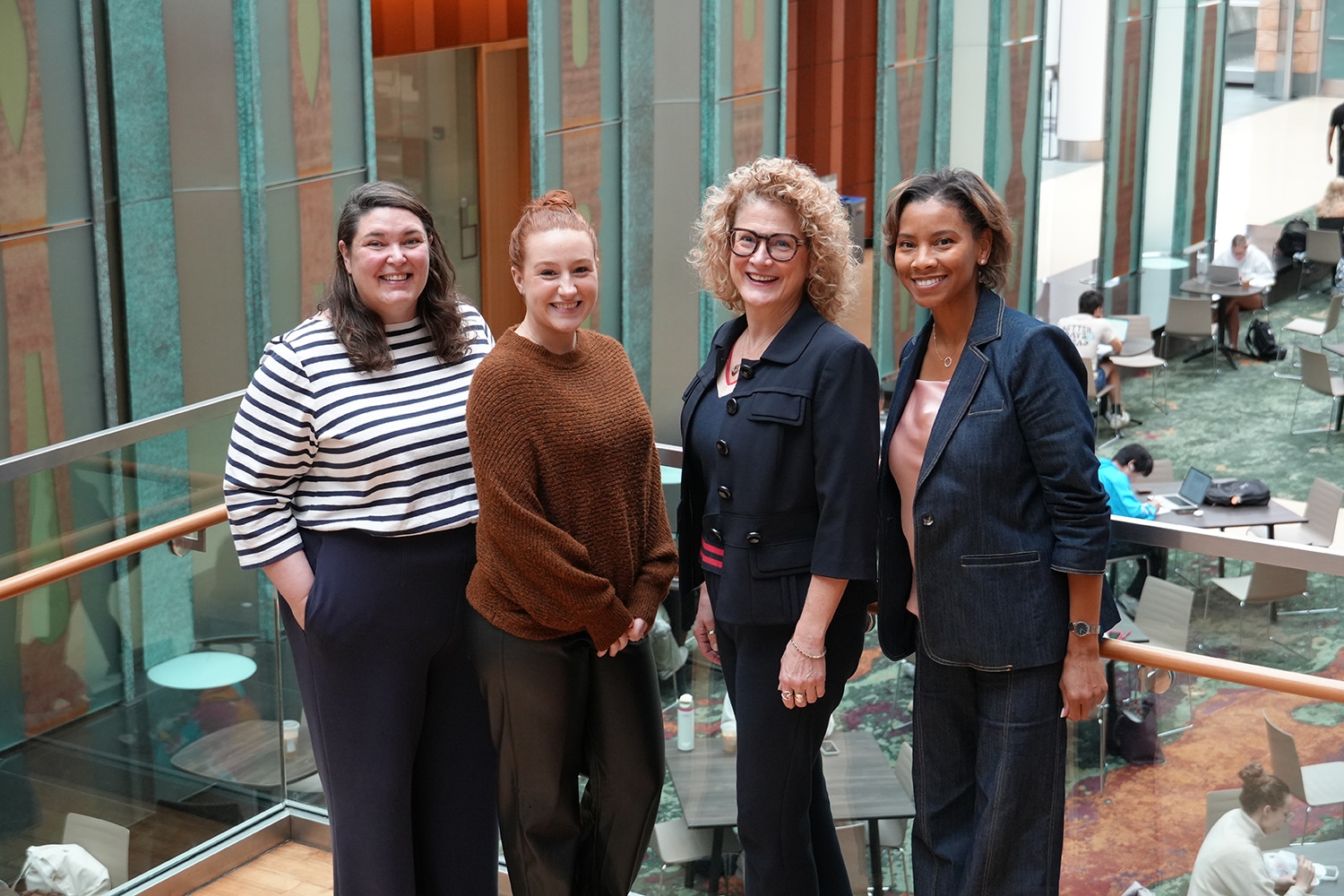
The CPO team consists of five staff members, led by Hunt Bruner and Faculty Director Monica Worline. Together, the team carries out CPO’s day-to-day duties, including marketing and communications, event coordination, delivering CPO’s programs, and amplifying the research of its community of over 800 scholars worldwide. The CPO Faculty Advisory Board, which includes CPO co-founders Professors Emeriti Jane Dutton, Kim Cameron, and Robert Quinn, among others, helps to facilitate connections within that community. The Center also taps into the expertise of a team of Executives in Residence. These corporate executives, non-profit leaders and entrepreneurs bring a wealth of practical experience to help accelerate the effectiveness of CPO’s work.
CPO offers a wide variety of programming and resources for students, researchers, and business professionals within Ross, the University of Michigan, and beyond. One of their most popular events is the Positive Business Conference, an opportunity for students, researchers, and business leaders to attend workshops, exchange ideas, and share success stories related to building positive and productive workplaces. The team is currently planning the 2025 conference, which will be a two-day event combining the Positive Business Conference and the Positive Research Conference, which focuses on highlighting research that helps leaders build high-performing organizations.
CPO also partners with centers, institutes, and departments across the university to offer workshop-style learning events that focus on topics related to building positive workplaces and strengthening organizations. For example, CPO recently collaborated with the Department of Athletics to kick off a series of events for student-athletes and other U-M students to equip them with the knowledge and skills to make lasting impacts personally and professionally.
There’s also programming for staff, faculty, and the broader community, including the Positive Links Speaker Series, which takes place monthly during the academic year and garners approximately 10,000 views each year from people who attend the live events, watch online, or view the recordings after the talk.
“Each Positive Links Speaker Series event highlights strategies and practices that are backed by science,” said Hunt Bruner. “We can each use this knowledge to strengthen or grow our relationships or some aspect of the world around us.”
The evolution of the Co-Learning Consortium
Besides its programming and events, CPO is also known for its Co-learning Consortium, a community where business leaders, researchers, and students can collaborate to understand how to make positive changes in organizations. This community was formerly the Positive Organizations Consortium and was limited to business leaders until this year.
Over the summer, the CPO team engaged in working sessions to reimagine the Consortium. As a result, the team has created a new model where business leaders, organizations, researchers, and students can learn and benefit from each other’s knowledge and expertise. For that reason, it was relaunched as the Co-Learning Consortium. CPO’s big priority now is growing this community.
“We reimagined and expanded the Consortium because we knew our work could be so much more impactful if we created a space where more perspectives are represented,” said Hunt Bruner. “If students have regular opportunities to network and talk with researchers and business leaders, and if scholars and anyone else who wants to be a part of this work can come together to talk about real-life examples that demonstrate how research and its practical applications transform workplaces, we can advance the science and the practices in a much bigger way and with a much greater reach.”
Building a positive environment within CPO
In addition to helping other organizations develop positive cultures, the CPO team of staff and faculty understand the importance of applying those same practices in their own area.
“We’ve identified regular practices that have helped to not only transform and sustain the way that we work together but also the ways that we get to know each other and how we build relationships with one another,” said Hunt Bruner.
At their team meetings, the CPO staff share what they refer to as “celebrations,” in which they reflect on the past week and the week to come and identify things that they want to celebrate or that they’re grateful for. The team also celebrates “glimmers,” which are little indicators that show that the work they are doing is creating energy or inspiring change.
“While we are busy promoting the work of helping others work well together, we’re also focused on working well within our own team,” said Hunt Bruner. “We get pretty creative in how we brainstorm program ideas and how we nurture our relationships with one another. Asking good questions helps us do that.”