Making Research and Teaching Happen: The PhD and Research Support Team at Michigan Ross
The Michigan Ross PhD and Research Support team works to keep the school’s research and teaching running smoothly. The team supports PhD students as they progress through program milestones, helps researchers find and manage grant funding, provides support for behavioral research, and advises on classroom technologies. Overall, the team ensures the Ross research community has the right tools and processes to advance their work.
“Building a better world through business starts with strong research and great teaching,” said Brian Jones, program manager of doctoral programs. “Our job is to support the people doing that work so their ideas can have real impact.”
One team, four functions
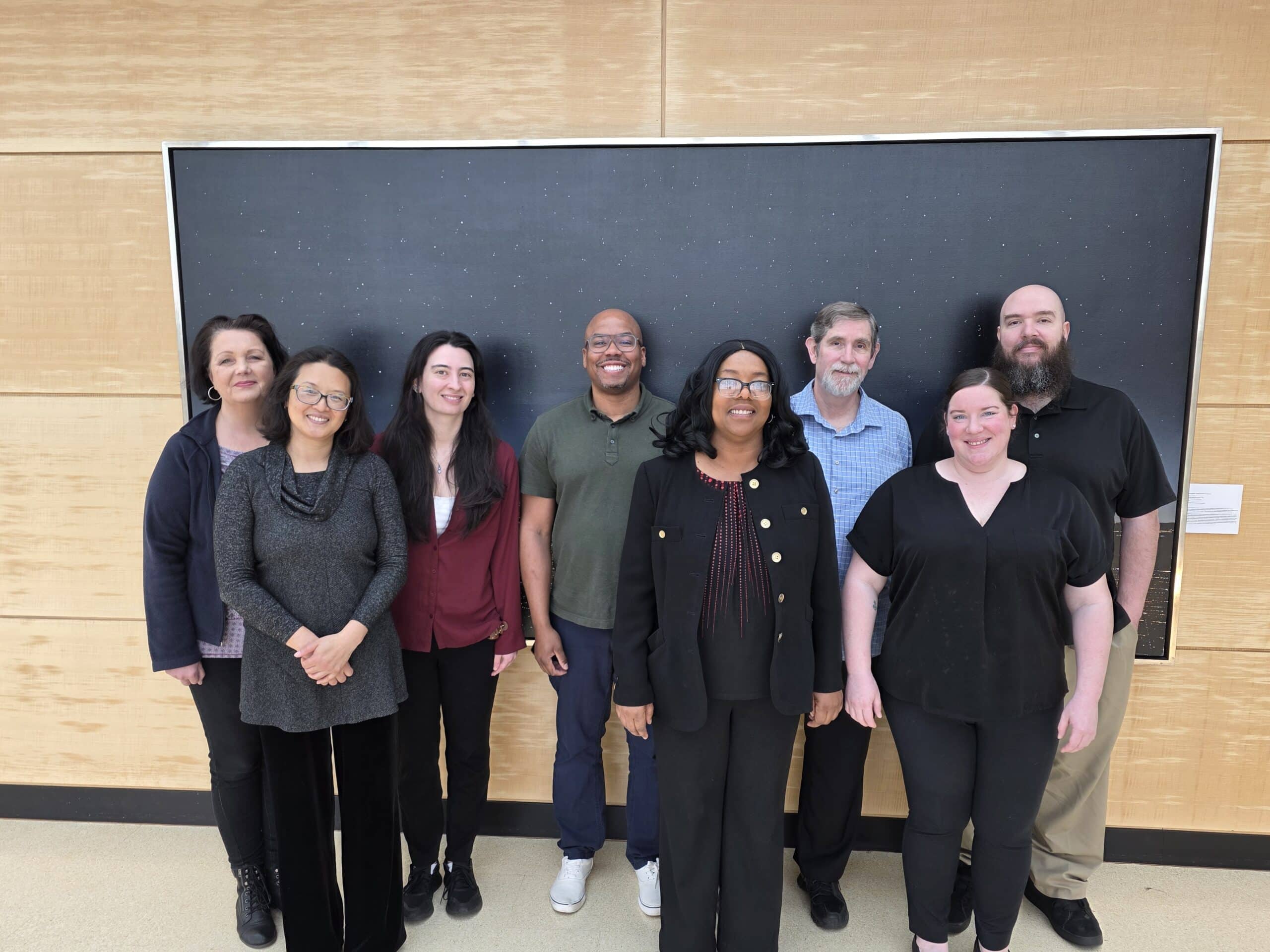
Jones leads the PhD and Research Support team, comprising seven people across four specialties: PhD student support, sponsored research support, academic technology, and the Ross Behavioral Lab.
- PhD student support: The PhD student support staff work to ensure students stay on the path to graduation by monitoring and tracking their milestones, including coursework, exams, and papers. The team also offers guidance to help students finish candidacy requirements and prepare to defend their dissertations. Because the PhD Program operates within the Rackham Graduate School, the team maintains close communication, sharing student progress and ensuring that the program’s processes and requirements align with Rackham policies and procedures.
PhD support staff also manage the annual PhD recruitment and admissions cycle. Ross aims to enroll about 17 new PhD students each year across seven areas: accounting, business economics, finance, management and organizations, marketing, strategy, and technology and operations. Recruiting happens year-round through DocNet, a network of business schools that promotes the PhD in business and helps prospective students understand what a doctorate in business entails.
- Sponsored research support: The sponsored research support staff help faculty and PhD students identify and secure research grant opportunities and support them through the application process. This includes putting together budgets, formatting submissions, and guiding proposals through the university’s required approvals. Once a grant is awarded, the team continues to support the project on the administrative side — helping with grant management, any required progress reporting for the sponsor, and final closeout reports when the project ends.
- Ross Behavioral Lab: The Behavioral Lab staff support faculty and students conducting in-person behavioral research, including experiments and studies that require controlled settings, observation, or specialized research tools. The lab offers dedicated research spaces, a computer lab for group studies, and features that let researchers observe sessions without interrupting participants. The lab also has specialized tools, including biofeedback equipment and an eye-tracking scanner, that measure things like body responses and where someone is looking.
Importantly, the team supports the logistics that keep studies moving, including maintaining subject pools so faculty and PhD students can easily recruit participants for their research. While the lab’s focus is mostly on in-person behavioral research, the team also supports some online research, such as surveys.
- Academic technology: Separate from Ross IT, academic technology staff focus on the tools and workflows that support teaching and learning across Ross. They consult with faculty and staff to understand what they are trying to accomplish, then recommend a technology approach and provide training to instructors on how to use the various tools, such as Qualtrics or Explorance, in their classrooms to distribute surveys and conduct course evaluations.
Innovation through cross-unit collaboration
Members of the PhD and Research Support team often work with each other to simplify everyday processes.
One example is a new workflow to make it easier for students to develop and submit dissertation proposals. The PhD student support team has partnered with academic technology to develop a Qualtrics-based form to replace the need to send attachments by email. When a student is ready to defend, they’ll complete a form that captures the details the program needs and prompts them to upload required materials, such as the thesis proposal and abstract. From there, the workflow can automatically route information to the appropriate recipients.
“This project is a great example of partnership across our unit: PhD program operations on one side and academic technology on the other,” said Jones. “Our goal is a process that works better for everyone — less manual work for staff, fewer ‘what do I do next?’ moments for students, and a more consistent, transparent path from being ready to defend to having the defense scheduled.”
A culture based on ownership
The team believes working well together starts with making sure everyone is aligned on two basics: expectations and roles.
Periodically throughout the year, and especially whenever someone joins or leaves the team, they take time to reset as a group. That includes talking through what Jones expects from the team, what the team expects from Jones, and what colleagues can count on from each other. This re-focusing gives each team member a chance to describe what their role looks like in practice, so responsibilities don’t fall through the cracks or get duplicated.
According to Jones, this practice creates an environment where people feel greater ownership of their work and have a clear way to raise questions or address issues as they arise.
“I believe that if people take ownership of their work, they will like coming to work more,” said Jones. “They perform better, trust each other, and are more likely to help each other out.”